Guide
How to connect Garmin to ChatGPT
There are a few ways to get your Garmin data into ChatGPT. This guide covers which ChatGPT plans support it, how the options differ, the setup steps for a hosted connector, and what to do when it does not work.
 Samuel KraftUpdated
Summary
- You need a paid ChatGPT plan. Custom MCP servers are added through developer mode, which the free plan does not have.
- Garmin has no connector of its own. You use a hosted service, a server you run yourself, or a file export.
- ChatGPT only talks to servers it can reach over the internet. A local server needs a public tunnel, a hosted one does not.
- Most options are read-only. To have ChatGPT write workouts to your watch, you need a platform on Garmin’s partner API, such as Shape.
Which ChatGPT plans support this
The paid ones. ChatGPT connects to external tools through MCP, and adding your own server needs developer mode. OpenAI offers it on Plus, Pro, Business, Enterprise and Education accounts. The free plan cannot add a custom server.
Developer mode is set up in a browser, on chatgpt.com. On a workspace plan an admin may need to allow it before the switch shows up. ChatGPT calls a server you add this way a plugin.
Ways to connect Garmin to ChatGPT
Garmin does not publish an MCP server, so every option comes from a third party. They differ in where the server runs, how it signs in to Garmin, whether ChatGPT can reach it, and whether ChatGPT can write workouts back.
| Option | Runs on | Garmin sign-in | Works with ChatGPT | Writes workouts | Cost |
|---|---|---|---|---|---|
Training platform with a connector Shape and other Garmin partner platforms | Hosted | Garmin OAuth | Yes | Yes | Subscription |
Hosted connector Various third-party services | Hosted | Varies | Yes | Varies | Free to a small subscription |
Local MCP server Open source projects on GitHub | Your computer | Garmin username and password | Only through a public tunnel | Usually not | Free |
File export FIT or CSV from Garmin Connect | No server | None | Yes, one file at a time | No | Free |
Training platform with a connector
Training platforms on Garmin’s partner API, Shape among them, work like this. You connect Garmin once through Garmin’s own sign-in page, the platform receives your activities and daily health data as the watch syncs, and ChatGPT talks to the platform. The partner API also accepts workouts, so ChatGPT can plan a session and it appears on your watch. The data includes planned workouts and training load, which the other options do not have. It costs a subscription.
Hosted connector
Several services give you a URL to paste into ChatGPT and read your Garmin data for you. Setup takes a few minutes. Before choosing one, check how it signs in to Garmin, since some use your username and password rather than OAuth, and check whether it can write workouts back. Some can, many cannot.
Local MCP server
Open source projects on GitHub run on your own computer and use Garmin Connect’s unofficial web API with your Garmin username and password. They are free and expose a lot of data. ChatGPT cannot reach a server on your computer, so you also have to publish it through a tunnel and keep both running. The login can stop working when Garmin changes something.
File export
Open an activity in Garmin Connect on the web, export the FIT file or the splits as CSV, and upload it in a ChatGPT chat. Nothing to install and no account needed. This works for looking at one workout. For questions about a whole month you have to export again every time.
Set up a hosted connector
These steps use Shape. The ChatGPT part is the same for any hosted connector, so if you picked another one, use its URL in step 3.
- 1
Connect Garmin to Shape
Create a Shape account, go to Settings, Connections, and choose Garmin. Garmin’s sign-in page opens. Approve it and the last 30 days start syncing. Shape does not see your Garmin password.
Create a Shape accountFree for 14 days. - 2
Turn on developer mode
On chatgpt.com, open the account menu at the bottom left and choose Settings. Go to Security and login and turn on Developer mode. Custom MCP servers need it.
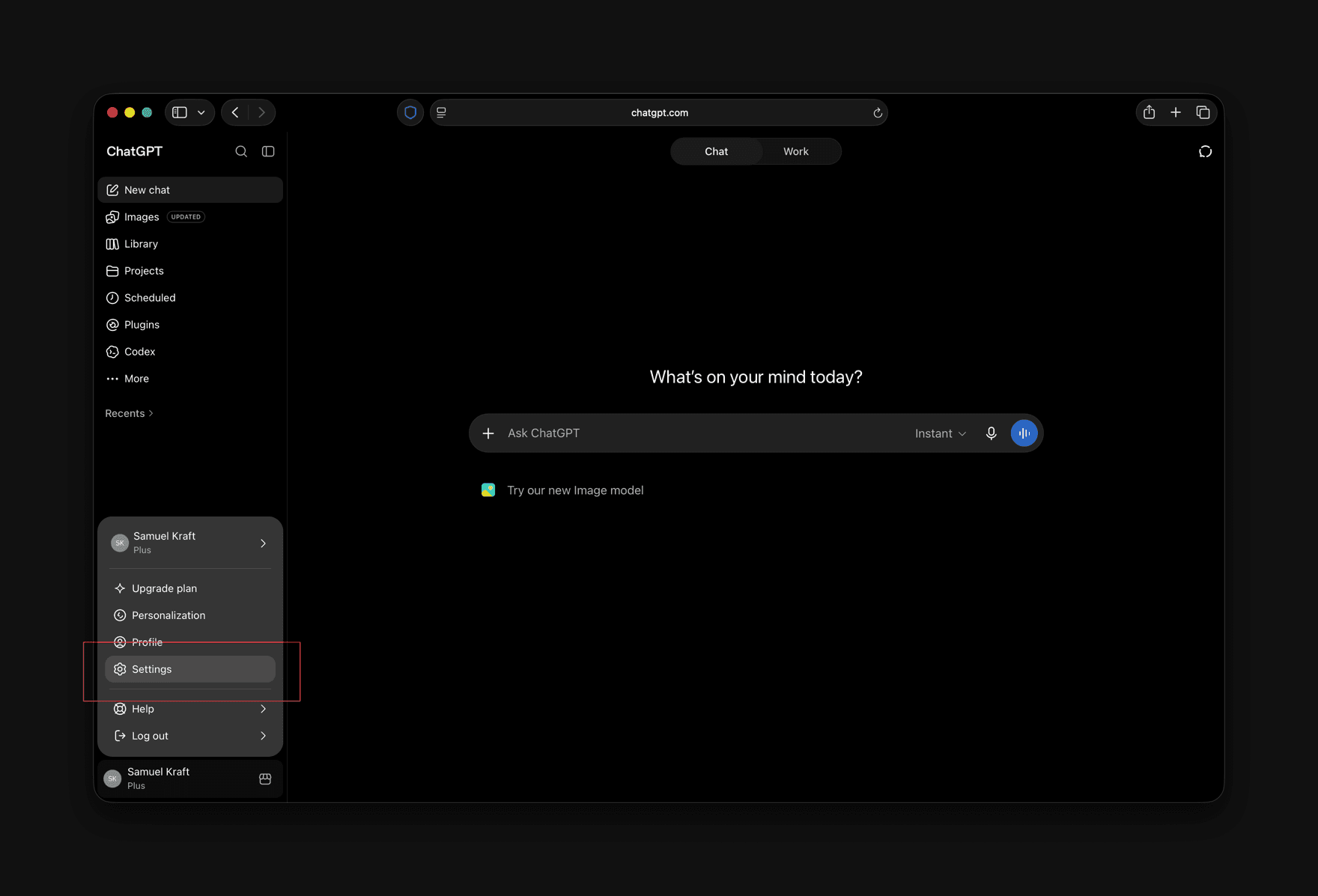
Open the account menu at the bottom left and choose Settings.
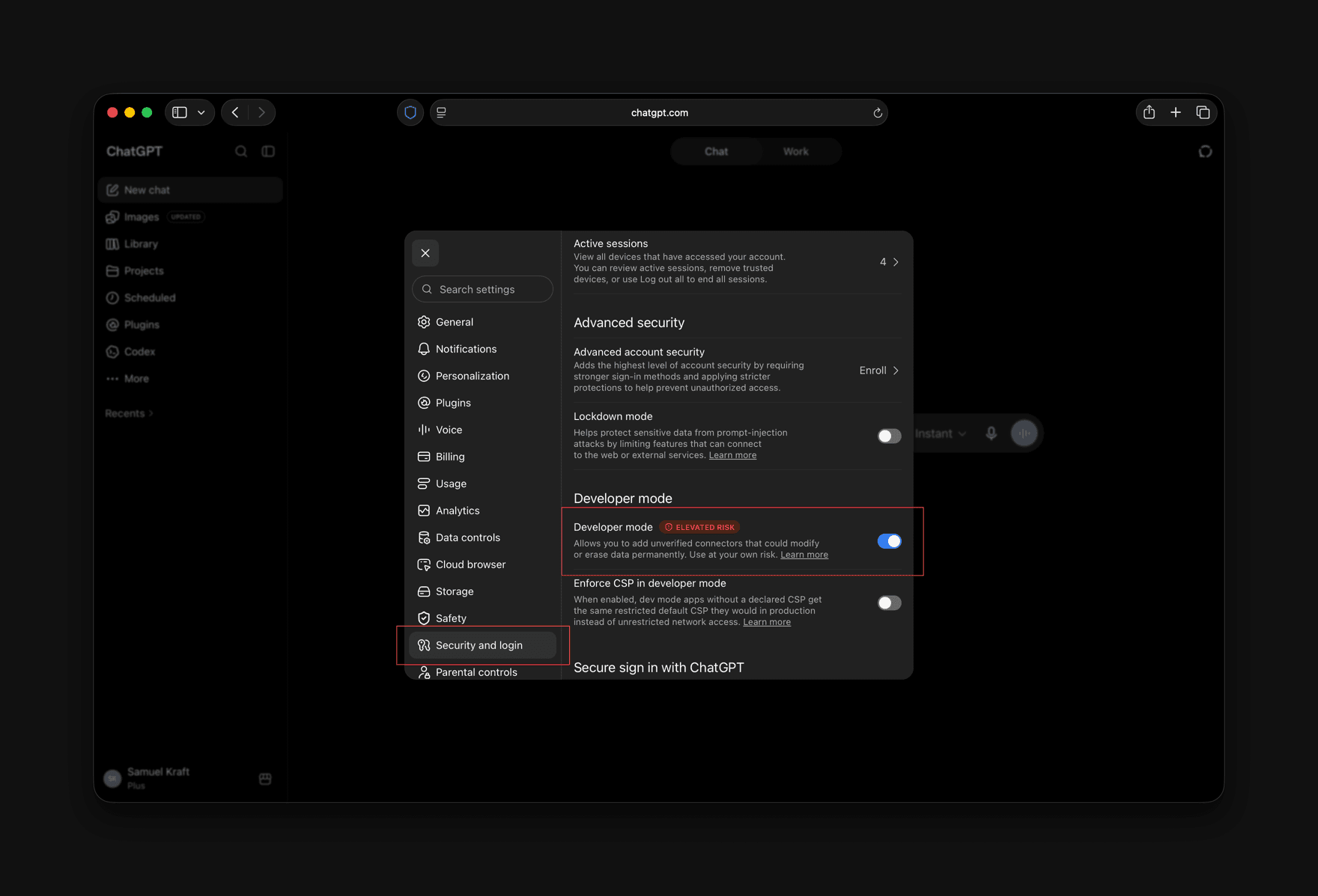
Go to Security and login and turn on Developer mode. Custom MCP servers need it.
- 3
Create the plugin
Open Plugins in the sidebar and press the plus button next to the search field. Give it a name, paste this as the server URL, leave authentication on OAuth, tick the acknowledgement and press Create:
https://shapecalendar.com/mcp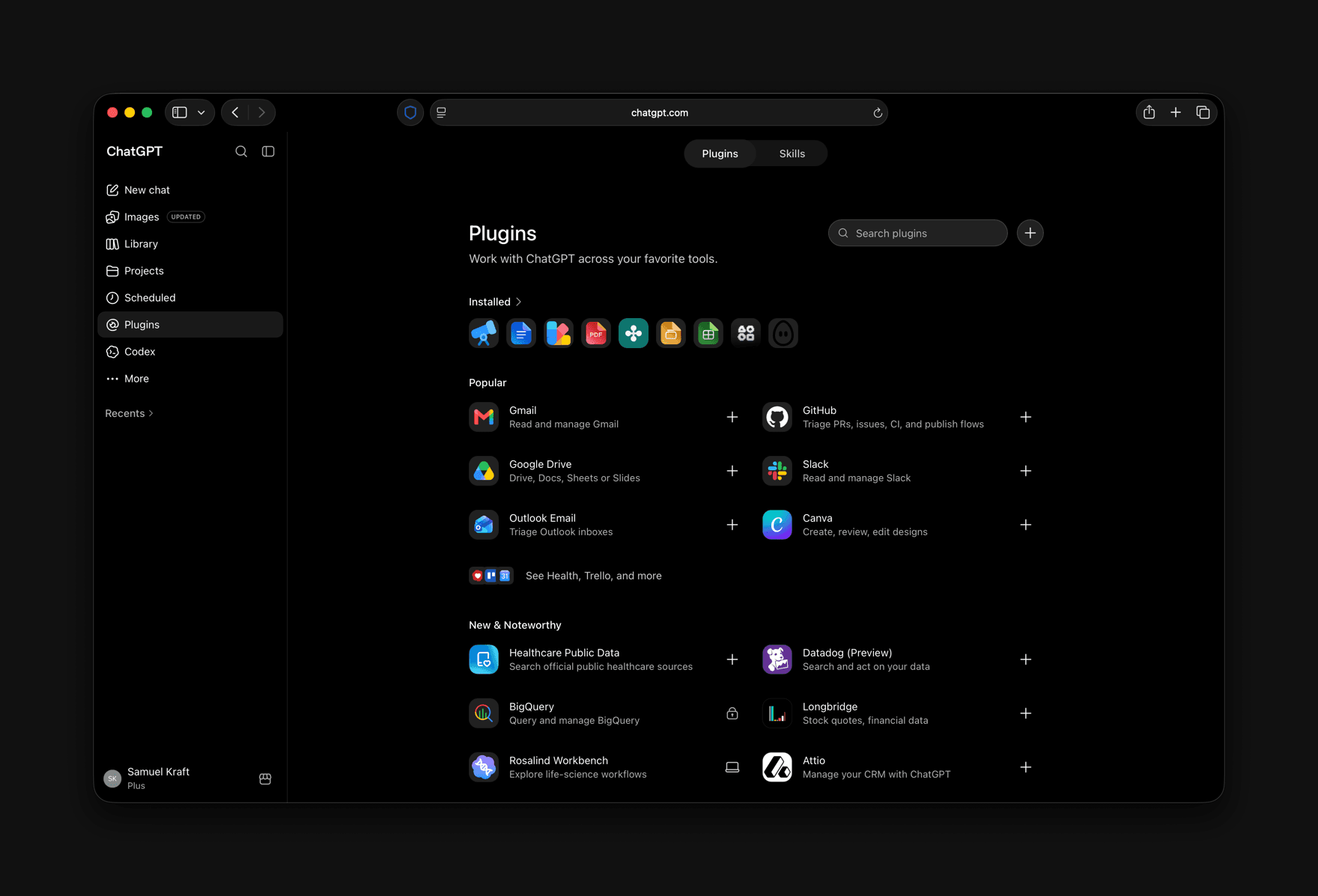
Open Plugins in the sidebar and press the plus button next to the search field.
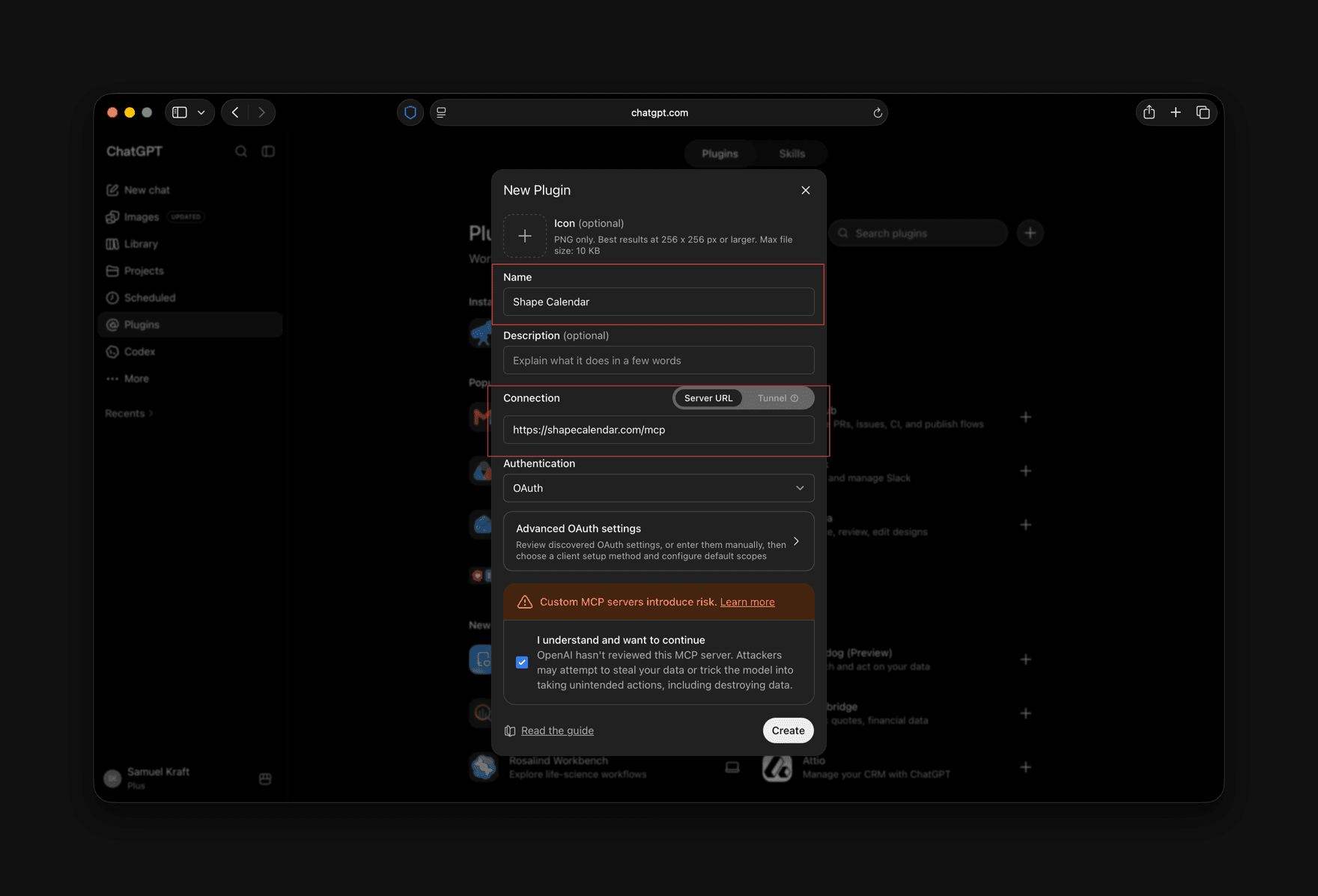
Name it, paste https://shapecalendar.com/mcp as the server URL, leave authentication on OAuth, tick the acknowledgement and press Create.
- 4
Sign in and allow ChatGPT
Press Sign in with Shape Calendar. A Shape page opens. Check that it shows the right account and press Allow ChatGPT. ChatGPT confirms the plugin is installed. The default permission, Allow low-risk actions, lets ChatGPT read without asking and confirms before it changes your calendar.
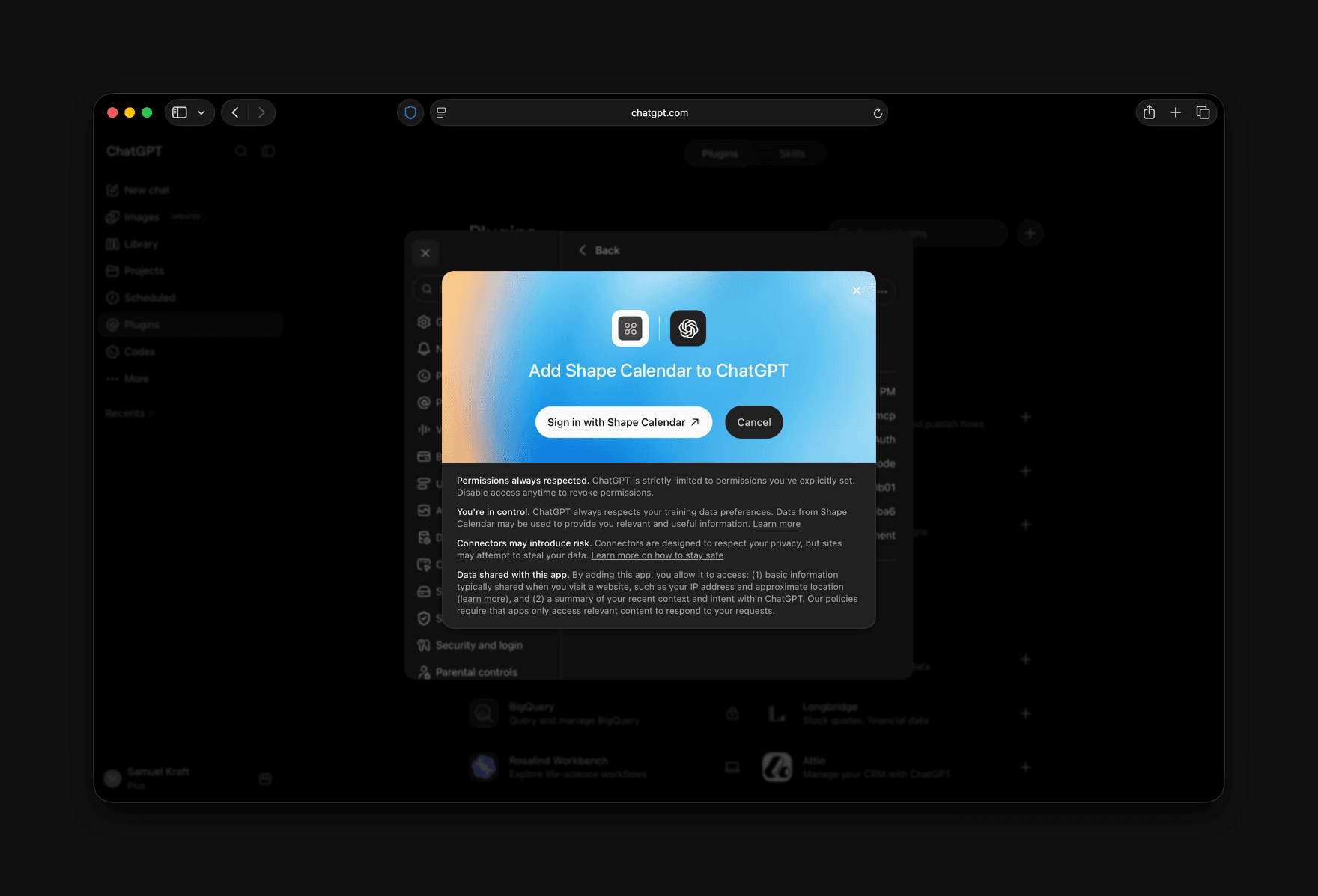
Press Sign in with Shape Calendar.
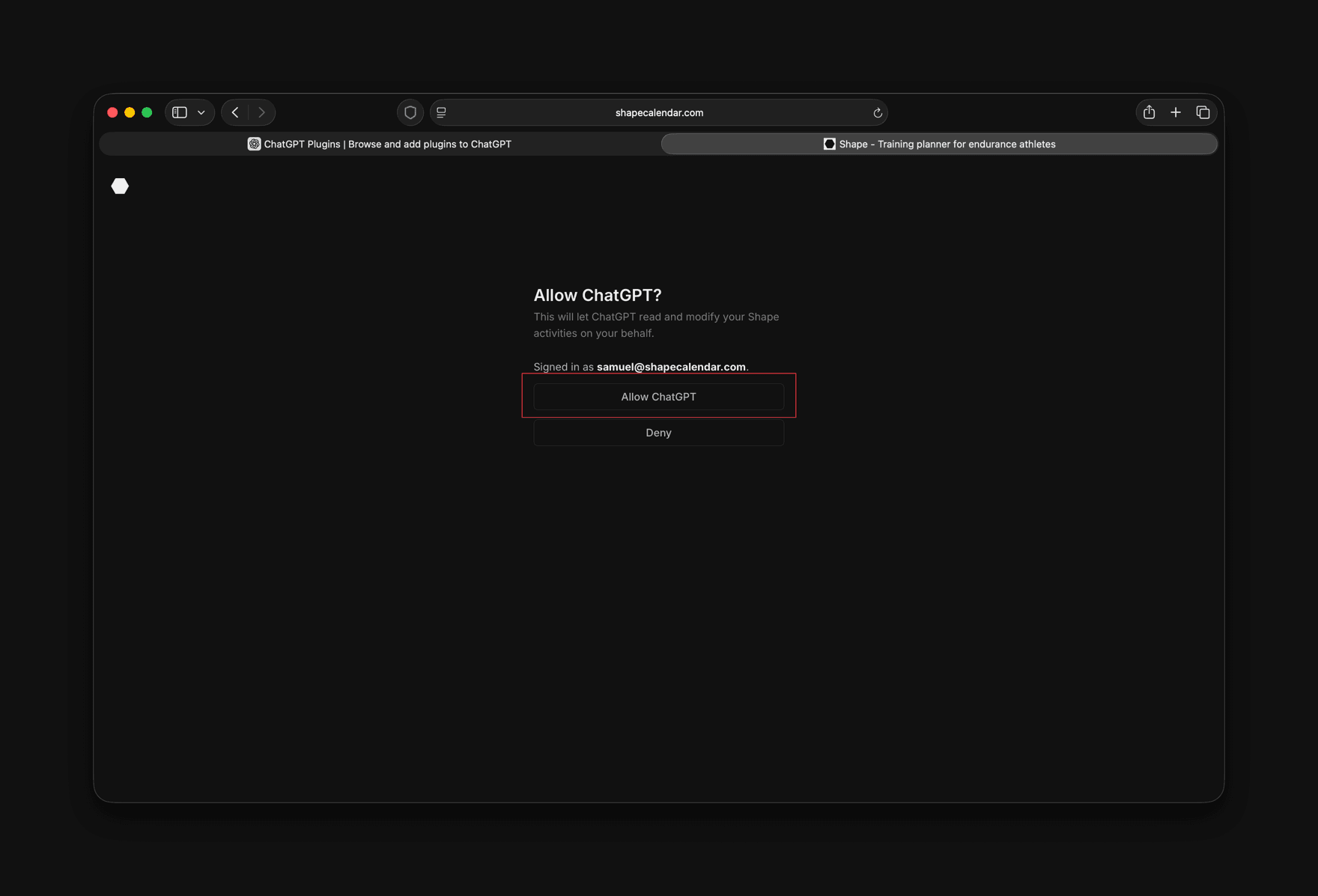
A Shape page opens. Check the account and press Allow ChatGPT.
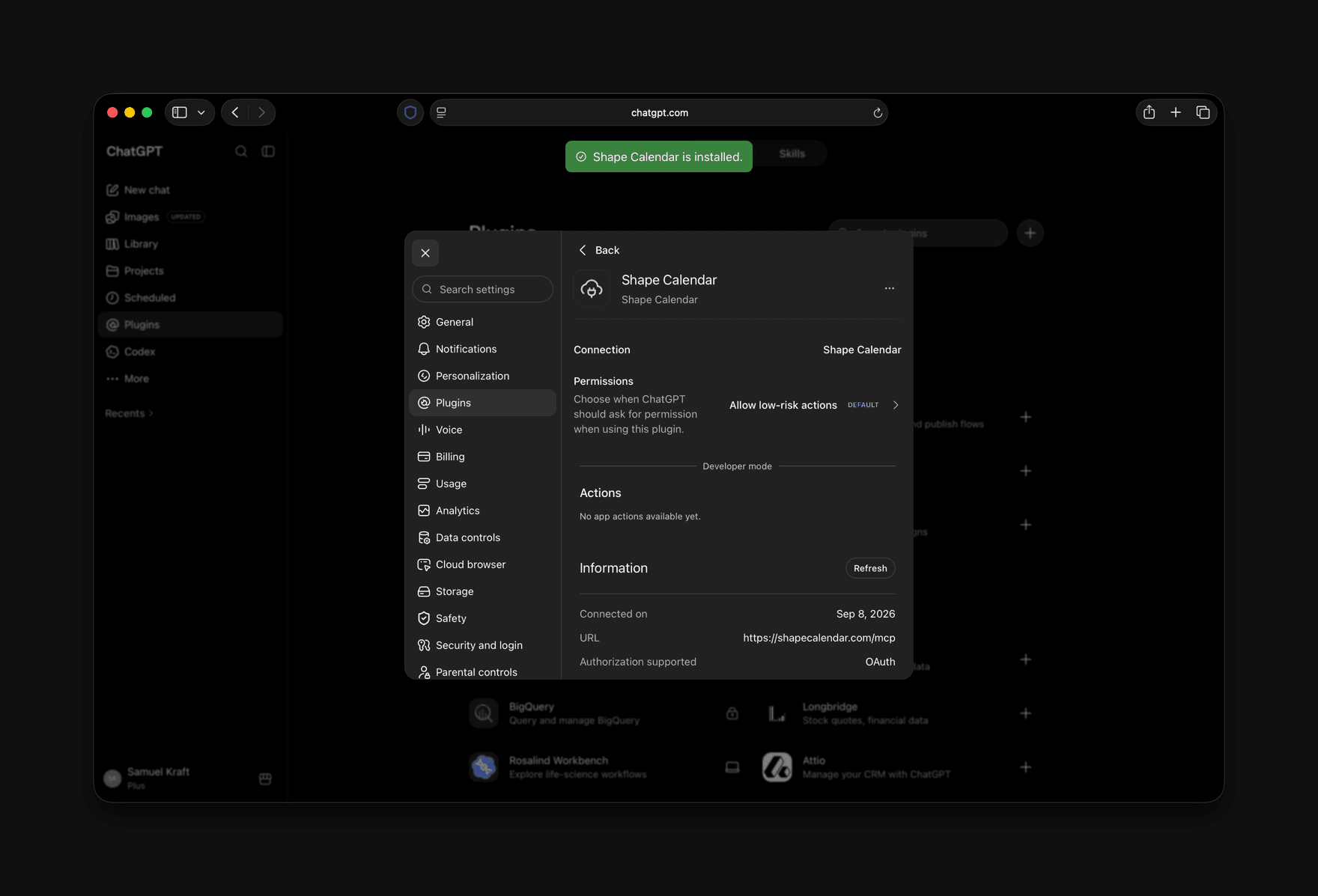
Shape Calendar is installed. The default permission, Allow low-risk actions, lets ChatGPT read without asking and confirms before it writes.
- 5
Start a new chat
Open a new chat and check that Shape Calendar is switched on in the tools menu under the message box. Then ask something like this.
- Look at my last 14 days in Garmin and plan next week. Two hard sessions, one long run, the rest easy.
- Open yesterday's intervals. Did I hold pace on every rep, and how long was I at threshold?
- Check my sleep, HRV and Body Battery this week. Should I do today's session as planned?
- Create a threshold run for Thursday: 4x10 minutes at threshold, 3 minute jogs between. Send it to my Garmin.
Claude, Cursor and other clients
The same server works in any client that supports MCP over HTTP, and one Shape account can be connected to several at once. The Claude steps are in the Garmin and Claude guide. Cursor, Raycast and clients without OAuth use the URL plus a token from Settings, API access. Config examples are on the Garmin MCP server page.
What ChatGPT can read
Once connected through Shape, ChatGPT has access to the following. The full tool list is in the MCP docs.
- Workouts
- Planned and completed workouts with sport, duration, distance, average heart rate, average power, elevation gain and training load. ChatGPT can filter by date range and sport.
- Workout details
- For workouts recorded on a Garmin device: heart rate, pace, cadence, power, elevation and GPS over the course of the workout, lap splits, and time in each training zone.
- Daily health
- Sleep, HRV, resting heart rate, Body Battery, VO2 max, body composition and steps, one record per day. If you have more than one source connected, the records are merged.
- Training status
- Readiness, fitness, fatigue and form, your acute to chronic load ratio, and the planned load for the coming week.
- Writing to the calendar
- ChatGPT can create, update, move and delete workouts, up to 100 in one call. Structured workouts sync to Garmin Connect and show up on the watch.
A read-only connector usually returns activity summaries and a daily wellness record. That covers questions about sleep and recovery. It does not cover pace within a workout, and it cannot put a session on your calendar or your watch.
Limitations
- Garmin sends data after each watch sync, not live. A workout you finished a few minutes ago may not be there yet.
- The Garmin API only sends the last 30 days when you connect. Older history has to come from Garmin’s data export, which Shape can import.
- Watch settings, alarms and Garmin’s own coaching plans cannot be changed from ChatGPT. Workouts can.
- Developer mode is a beta feature on OpenAI’s side. Menus move, and workspace admins can switch it off.
Troubleshooting
- There is no Developer mode switch in settings
- Developer mode is only on paid ChatGPT plans, and only in a browser. Check that you are signed in to the paid account on chatgpt.com, not in the mobile app. On a Business, Enterprise or Education workspace an admin may have to allow it first.
- The plugin is installed but ChatGPT does not use it
- Start a new chat and check that Shape Calendar is switched on in the tools menu under the message box. Naming it in the prompt helps: "use Shape to look at my last two weeks".
- ChatGPT asks for confirmation before every change
- That is the default permission, Allow low-risk actions. ChatGPT reads without asking and confirms before it writes to your calendar. You can change it on the plugin's page, but confirming writes is a reasonable default.
- ChatGPT says there is no Garmin data
- Garmin sends activities to Shape after each sync from the watch, and the first sync covers the last 30 days. Sync the watch, wait a minute and ask again. Older history comes from the Garmin export, see the questions below.
- A workout shows up twice
- Two sources recorded the same workout, usually Garmin and Apple Health. Shape pairs them on import and keeps one. If a pair was missed, ask ChatGPT to pair the two activities, or do it in the calendar.
- The sign-in page does not open
- Your browser is blocking pop-ups, or you are signed out of Shape in that browser. Sign in to Shape first, then press Sign in with Shape Calendar again.
Questions
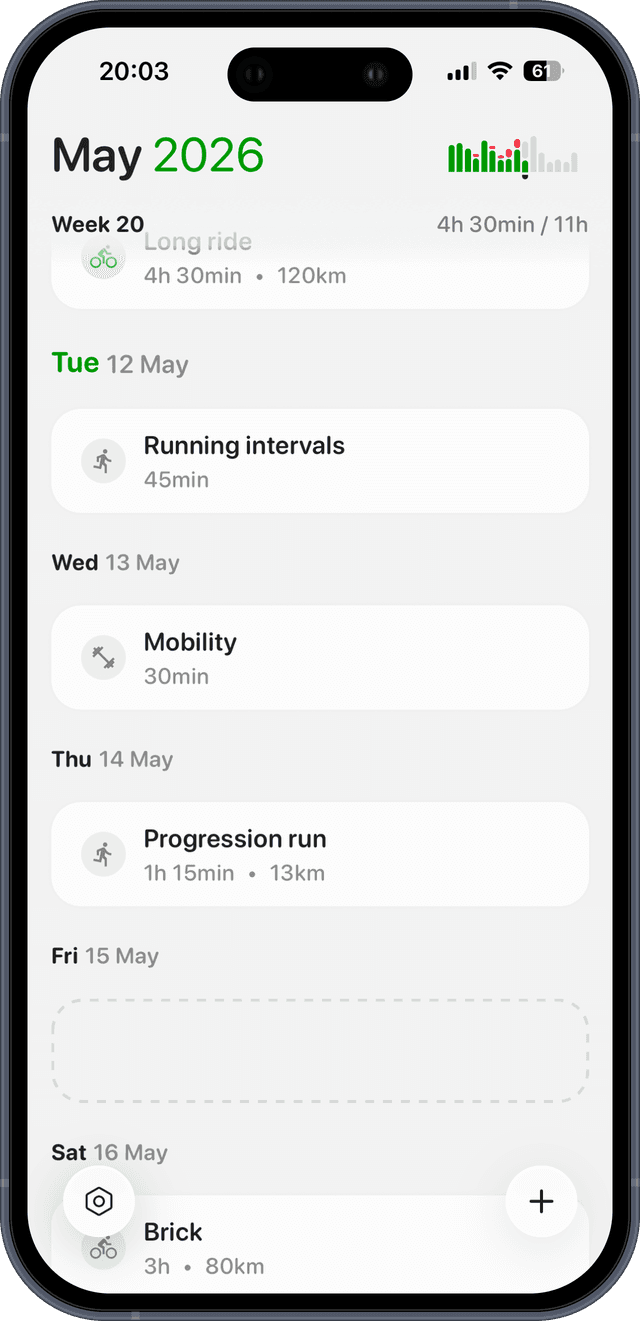
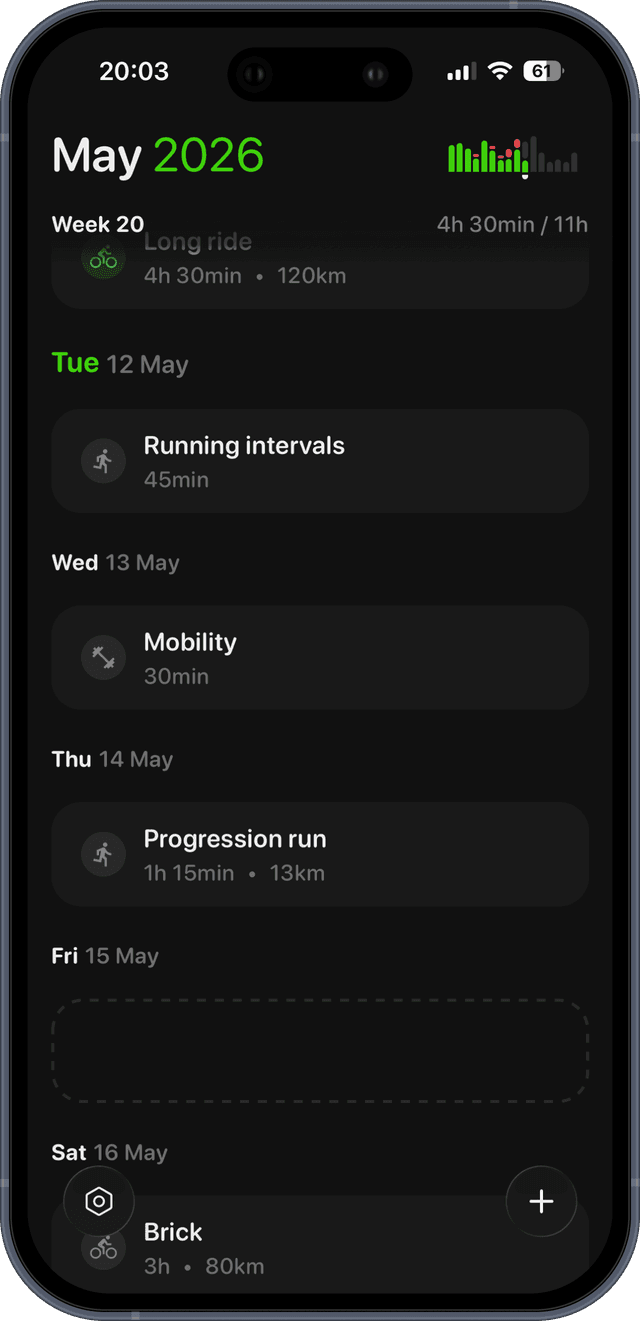
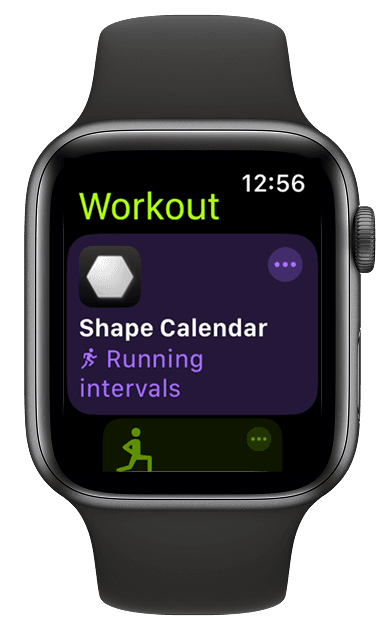
Let ChatGPT plan your training. Shape sends it to your watch.
Connect Garmin, connect ChatGPT, and every workout ChatGPT plans lands on your Garmin. Free for 14 days.