Swim calculator

Critical swim speed calculator

Swim a 400m and a 200m all out, enter both times, and get your threshold pace per 100m — the number every swim training zone is built from.

CSS is the fastest pace you can hold aerobically. It is swimming's equivalent of a runner's threshold pace or a cyclist's FTP. Everything above it accumulates fatigue quickly; everything below it you could keep going.

It comes from two all-out time trials. The extra 200m in the 400 is swum at the fastest speed you can actually sustain, so the difference between the two times is what that speed costs.

  1. CSS in m/s = (400 − 200) ÷ (400m time − 200m time)
  2. Pace per 100m = (400m time − 200m time) ÷ 2

A 6:00 400m and a 2:50 200m gives a CSS of 1:35 per 100m.

Warm up thoroughly, then swim 400m as hard as you can hold to the end. Recover fully, with five to ten minutes of easy swimming until your breathing has settled, then swim 200m all out. Both efforts have to be genuine maximums from a push start, in the same session, in the same pool. Pacing the 400 conservatively is the usual mistake, and it flatters your CSS.

Every six to eight weeks is plenty. CSS moves with your aerobic fitness and your technique, and technique in particular can shift it a long way in a beginner, more than any amount of training volume will. Retest at the start of a block rather than at the end of a hard week.

Yes, and it is worth being consistent about. A 25m pool gives you more push-offs than a 50m pool over the same distance, which is worth a few seconds per 100m. Test in the same pool each time, or your retest measures the pool rather than your swimming.

Do the test over 500 and 250 yards and the same subtraction works: the difference divided by 2.5 gives your pace per 100 yards. Or swim it in a 25 yard pool as 400 and 200 yards and treat the result as a pace per 100 yards, which is roughly 9% faster than the same effort per 100m.

Yes, and it is the best way. Swim load from pace works out as duration in hours × (CSS ÷ your actual pace)² × 100, the same formula that turns power into TSS and running pace into rTSS, so a swim scores on the same scale as a ride or a run.

It also beats heart rate in the water. A wrist sensor reads badly under the surface, and open water swims often come back with no heart rate at all, where distance and time are always recorded.
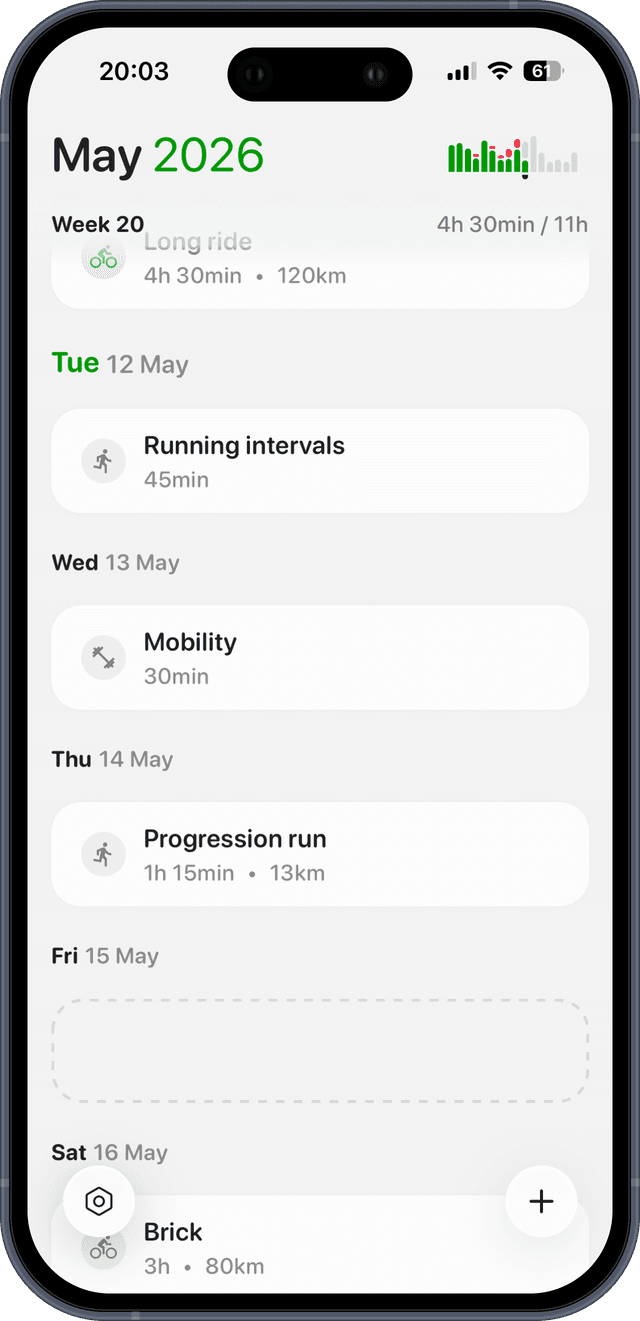
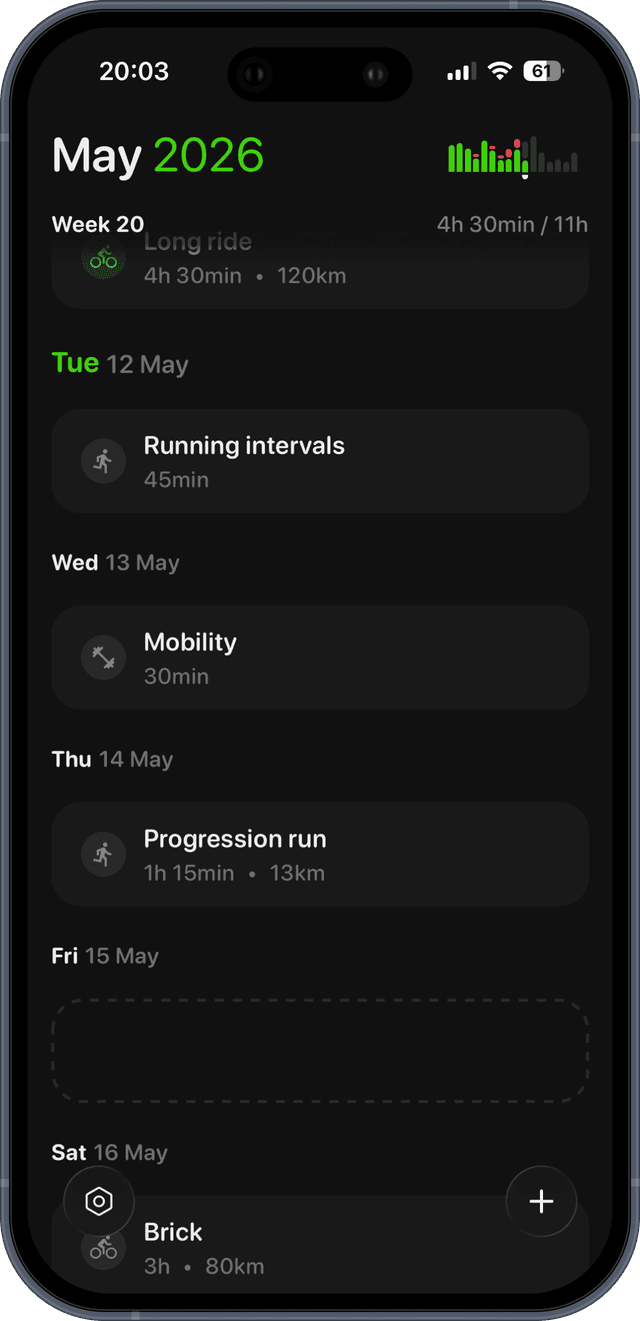
Set your CSS once in Shape Calendar and every swim you sync from Garmin, Wahoo or Apple Health is scored from it automatically, alongside your rides and runs on one fitness chart, so a heavy swim week shows up in the same place as a heavy run week.
Shape on iPhoneApple Watch
Shape Calendar

Every swim, scored like every ride.

Set your critical swim speed once and Shape turns your pool and open water swims into training load, on the same chart as your bike and run.

Download on the App Store